The musings, struggles and observations of an Englishman learning Welsh.
All Posts
Search Posts
Donate! Buy me a coffee!
If you play and enjoy Help Hannah's Horse or like this site and you'd like to say thanks, please consider buying me a coffee on:

Search Results (5 posts found):
One tiny thought about writing your own games, is that playing them isn't as much fun as playing games written by other people. This applies even if you're pleased with how the game turned out, and the main reason is that part of the attraction of playing a game is to see what comes next. In Sim City you keep building a population to see what rewards you get; in Transport Tycoon it's to see what new vehicles appear; in Arkanoid it's to see what new level designs and bonuses await. When you write your own game, you're already aware of what awaits you, even if your game is sufficiently difficult that you can't get there.
With Barkout, I know what levels I created, I know what bonuses there are, and I know what the final boss looks like and how to defeat him.
Knowing these things does take a lot of the fun out of the game, even if the mechanics themselves are spot on.
With Barkout, I know what levels I created, I know what bonuses there are, and I know what the final boss looks like and how to defeat him.
Knowing these things does take a lot of the fun out of the game, even if the mechanics themselves are spot on.
Ffenestri (Windows), by Lois Arnold, herself a Welsh learner and now an author, is a wonderful collection of stories and poems aimed at adult learners. Arnold cleverly divides the book into graded sections aimed at different levels of learner from mynediad (entry level) to canolradd (intermediate). Each section contains stories and poems on a variety of themes, meaning there's something for everyone here.
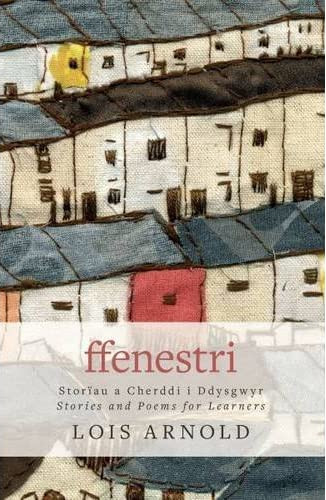
There's a real satisfaction the first time you finish reading a piece in a new language, and Lois Arnold makes it easy to be satisfied as everyone should find at least something that's within their ability. The stories and poems start using only the present tense, making them accessible even to those who are quite new to Welsh, and the reader is aided by a glossary of new terms at the bottom of every page. The difficulty level then gradually increases as new words and tenses are introduced. The stories and poems cover myriad subjects from cases of mistaken identity, to muddy festivals, space exploration and quiz nights. And they're not just filler material; each story and poem is a good piece in its own right.
I got great enjoyment from Ffenestri and it's a book I would recommend to anyone just starting out in Welsh. The short nature of the pieces means you don't get bogged down in a long story, and if you happen to pick something a little too difficult you're not stuck with it for the long run. The glossary means you're not constantly referring to a dictionary and thus interrupting your flow and enjoyment of the material.
Christmas has been and gone and I've now got a small collection of Welsh books aimed at learners. I already had "Ffenestri" by Lois Arnold, and I now have two Bethan Gwanas books to add to my growing library: "Yn ei Gwsg" and "Bywyd Blodwen Jones".
I've started the Blodwen Jones one, but to my shame I have only made it about three pages in. It's not because it's too difficult (it's actually about right for me), it's because life, as it is wont to do, has taken over.
That's also why I haven't been updating this blog very often: I just don't find the time.
My Welsh learning is still continuing apace though. My DuoLingo tree is now almost entirely level five (nothing below a four) and I've moved onto level two on Say Something In Welsh. The range of things I can say in Welsh now far outstrips what I can say in French, and I started learning that when I was 11 at school!
What I lack is someone to speak Welsh with. No one else in the house is interested in learning, and I suspect wouldn't stick with it long if they did. It may be time to venture out and maybe go to a meet up in Bristol or Casnewydd.
Ok, so it's been about seven months since I started learning Welsh in earnest, and he's what I think is hard and what I think is fairly easy about Welsh:
1. Mutations. Letters change at the start of one word depending on what word they follow. However I'm finding that this starts to feel more natural in most circumstances after a while.
2. Versions of "about" and "of/from" for each pronoun. If you're talking about a thing, they're "am" and "o" respectively. But if you're talking about/from me, you, her, him, us or them you're looking at "amdana, amdanat, amdani, amdano, amdanon and amdanyn" and "ohono, ohonot, ohoni, ohono, ohonon and ohonyn"!
3. The letter "Ll". Yes, it counts as one letter. The pronunciation is somewhere between ell and hissing like an angry goose with a headache. For some reason I find it easier to pronounce at the start of a word, like Llawr, than in the middle or end of a word, like Arall or Galla.
4. Conjugations. Well, this is the same for any language, really. Remembering the conjugations of short-form verbs is just one of those things you have to get used to.
5. Yes and no. There are no words for Yes and No in Welsh, you just repeat back (or negate) the appropriate conjugation of the verb in the question. "Do you like cheese?", "I do". "Are you tired?" "I am". "Are you reading?" "I am not". But that's only in the present tense. In the past tense it's usually "Do" for yes and "Naddo" for no. But then for emphatic questions it's "Ie" for yes and "Nage" for no. If the question was asking if there is something with you (see below) you reply with Oes or Nag Oes. Remembering which to use is the hard part.
6. There aren't many words that are similar to other European languages. There are some, mostly more modern words borrowed from English: tacsi, parcio, ffatri, ffôn, beic, etc; and some ecclesiastical words like eglwys (church) and capel (chapel) but not to the extent that you find with Romance or Germanic languages.
Things that are easier than I expected:
1. Mutations. Yes, they're difficult, but actually you get used to them, and in many cases the rules are quite consistent. You just get used to dropping the G in words like gweithio and gweld when they follow a sentence subject. You get used to changing D to Dd in adjectives after "yn", and you get very used to nasal mutations after "fy".
2. Conjugations. Although remembering them is difficult, many of the conjugations are quite consistent and actually fit in quite well with the pronoun they go with.
3. Possession. I've said before about there being no form of "I have a (something)" in Welsh, they instead say something is "with them": Mae ci gyda fi - "There is a dog with me". I got the hang of this much quicker than I thought. I think you just change your way of thinking and everything slots together.
4. The language as a whole. I'm only a beginner. Very much so. But I've been surprised at how much I've covered in such a short space of time. I'm not proficient by any stretch of the imagination, and I can only string together fairly simple sentences, but on the other hand I can make many more types of sentences in Welsh than my partner's daughter can in Spanish; a language she's been learning at school for two years now. I can use the present tense, the past perfect, a sort of imperfect, the future in several forms and some conditional tenses and even a kind of limited subjunctive mood.
On the whole, Welsh has (so far) been easier than I expected. It's not the incomprehensible jumble of letters it always looked like on road signs when we used to visit my Grandma in Rhossili when I was a child. In fact, in many ways it's a lot easier than the languages I'd been taught at school.
The first tense I'm learning in Welsh is the present tense. When I started learning Welsh I held the opinion that it was a difficult language full of complicated constructs that I'd struggle to learn compared to French, Spanish or German.
Turns out I was wrong. Forming the present tense in modern colloquial Welsh (literary Welsh is quite different) is probably the easiest of any language I've learnt. The reason is thus: all simple present tense sentences involve conjugation of the same verb, "bod" (to be) followed by your action verb in its infinitive form (called a verb-noun, in Welsh).
So, where in French you'd need to know the first person singular and plural, second person singular and plural, and third person singular and plural forms of every verb you want to use, in Welsh you need only know the various conjugations of bod and the infinitive form of the other verb.
"I am swimming" is "Dw i'n nofio", where "dw" is the form of bod and nofio is to swim.
"He is swimming" is "Mae e'n nofio". "She is swimming" is "Mae hi'n nofio".
"I am eating" is "Dw i'n bwyta". "He is eating" is "Mae e'n bwyta".
And I really love this about Welsh. Forming a whole range of new sentences only involves learning one form of each new verb. It's so wonderfully consistent, and it lets you feel you're making progress almost instantly.